Role

Strategy & Design

Product

Houzz UI Design System

Houzz UI: Unified Design System

Establishing a single source of truth across Houzz’s SaaS and consumer products to speed innovation and support its growth as a software-focused company serving top-tier design and contracting professionals.
Challenge

Houzz operated both the SaaS (Houzz Pro) and consumer product (Houzz) without a shared source of truth, leading to inconsistent UI, growing design and technical debt, and noticeable brand drift across teams. Fragmented files, duplicated work, and limited accessibility standards slowed product velocity, while rapid team growth made onboarding increasingly difficult. The need became urgent as we expanded the SaaS product and prepared the platform to scale.
Dazzle Logo with sign vertical

My Role

By collaborating closely with engineering and cross-functional teams, I founded Houzz’s design system team and spearheaded the creation of a design system to accelerate innovation and address gaps in the design and development process.

I defined the strategic vision, foundations and token structure, built a shared atomic component library, implemented theming across the SaaS and consumer product, and established governance, documentation, and accessibility standards.

I also drove executive alignment and roadmap planning, working continuously with engineering to ensure design and development stayed in lockstep as the product scaled.


How It Worked

At Houzz, I structured the design system using atomic principles, from foundations to components to product-level patterns, so teams could build consistently and move faster.

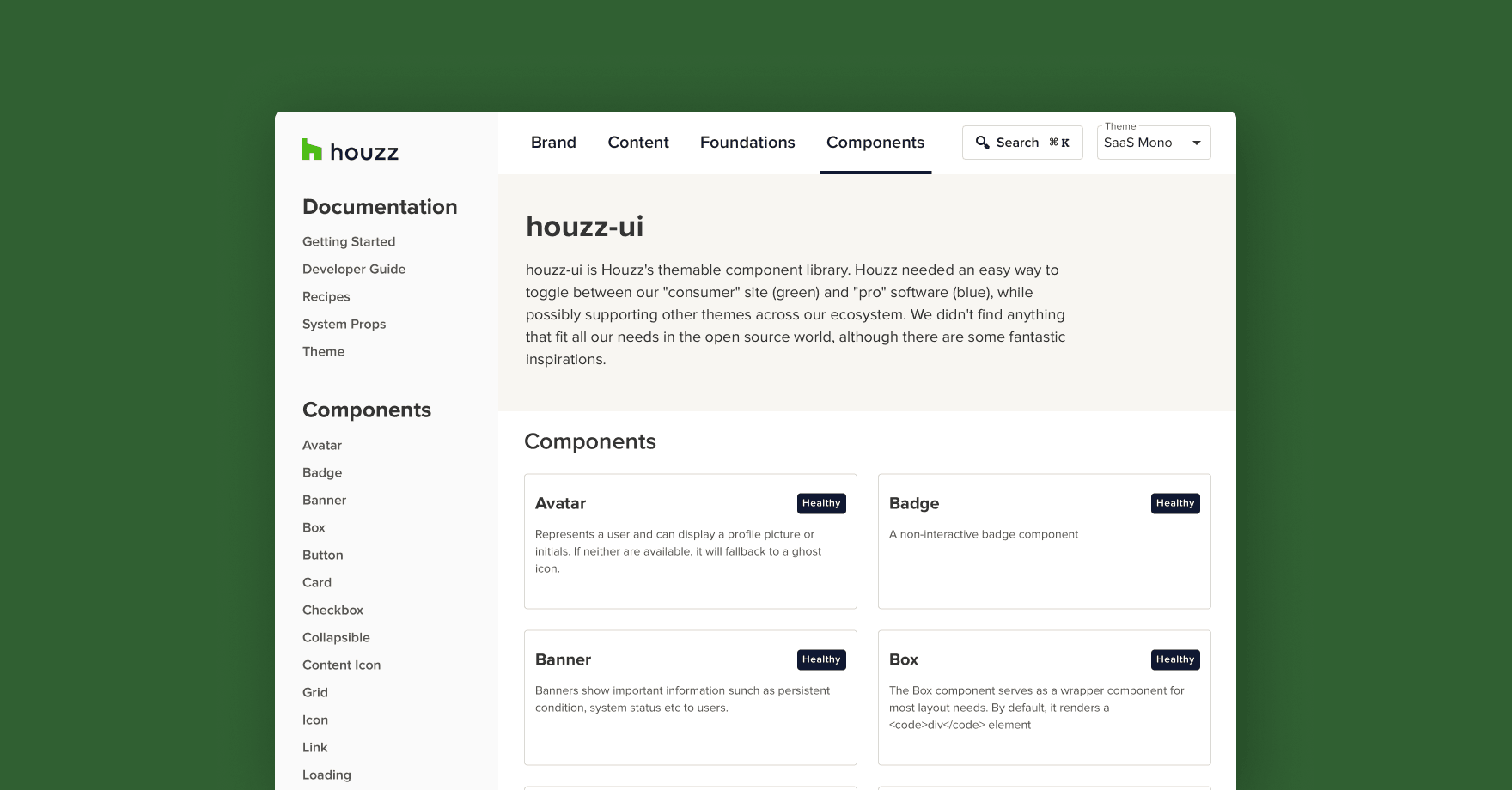
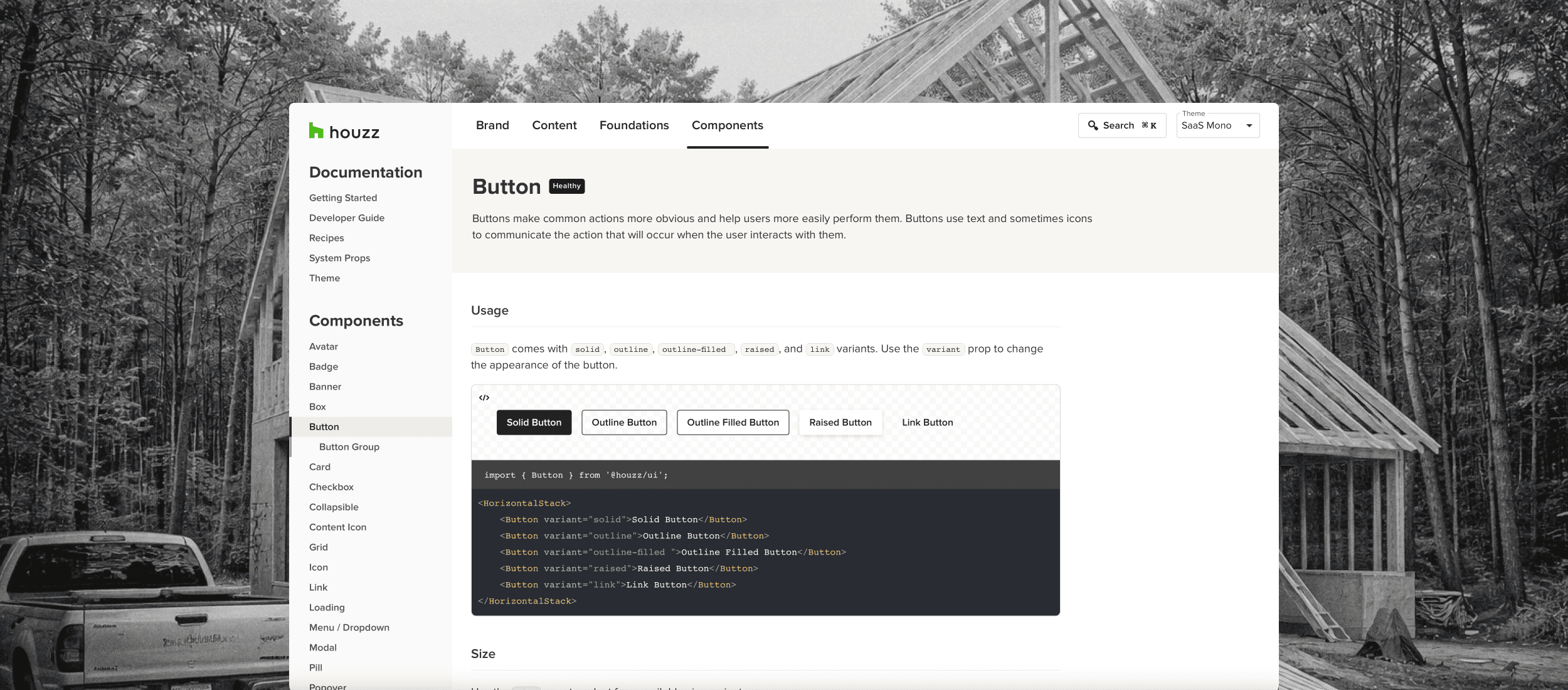
We unified the SaaS and consumer product under a shared system with theming, supported by Figma variables, Storybook, and a custom documentation site.

I established governance through cross-functional reviews, accessibility standards, and ongoing design–engineering alignment to ensure the system scaled with the business.


Impact

The system is still in place today and used across all design and engineering teams at Houzz. Adoption became self-reinforcing, with engineers actively encouraging designers to build within the system.

As a result, design time dropped, engineering velocity increased, and both design and technical debt declined. Additionally, accessibility improved, cross-product consistency strengthened, and a shared design language aligned SaaS and consumer products.

The system ultimately influenced brand evolution, platform-level roadmap planning, and more strategic product conversations grounded in reusable patterns.

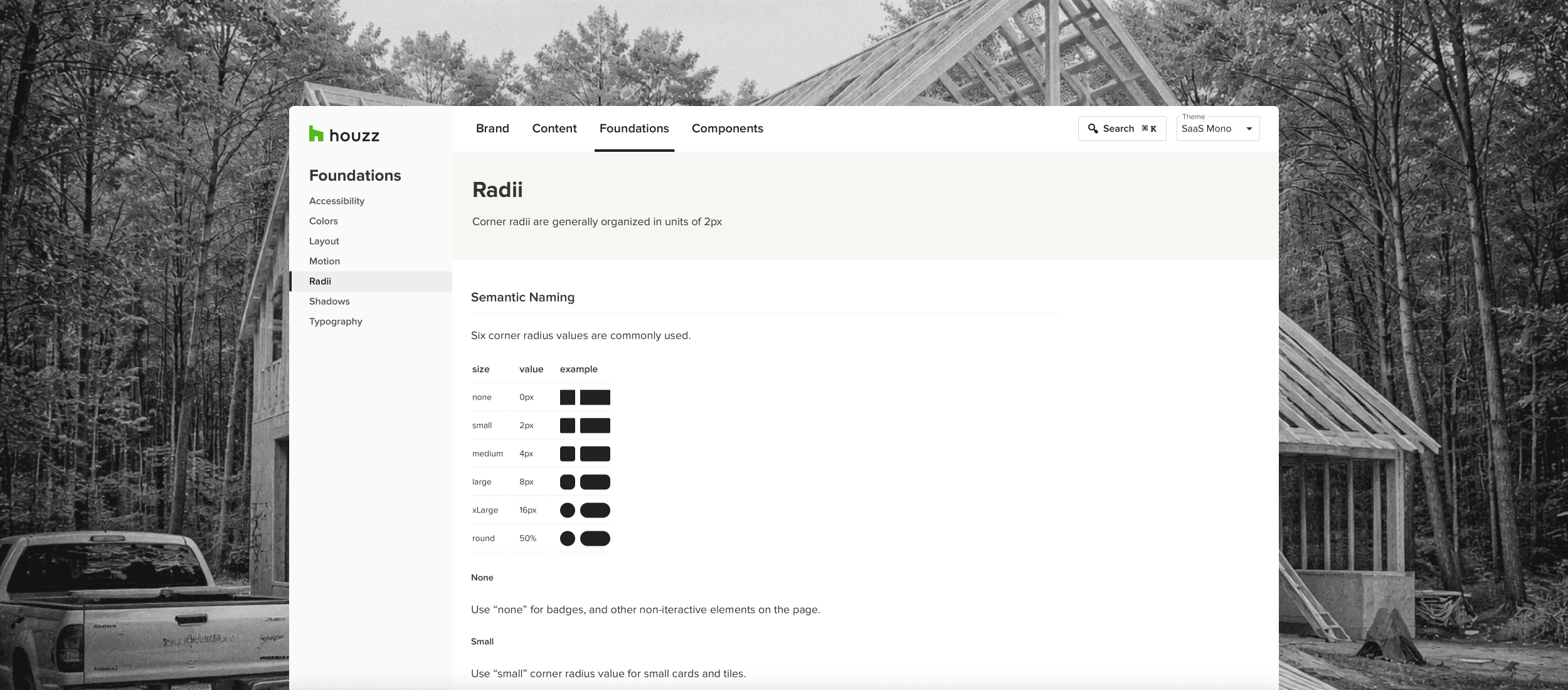
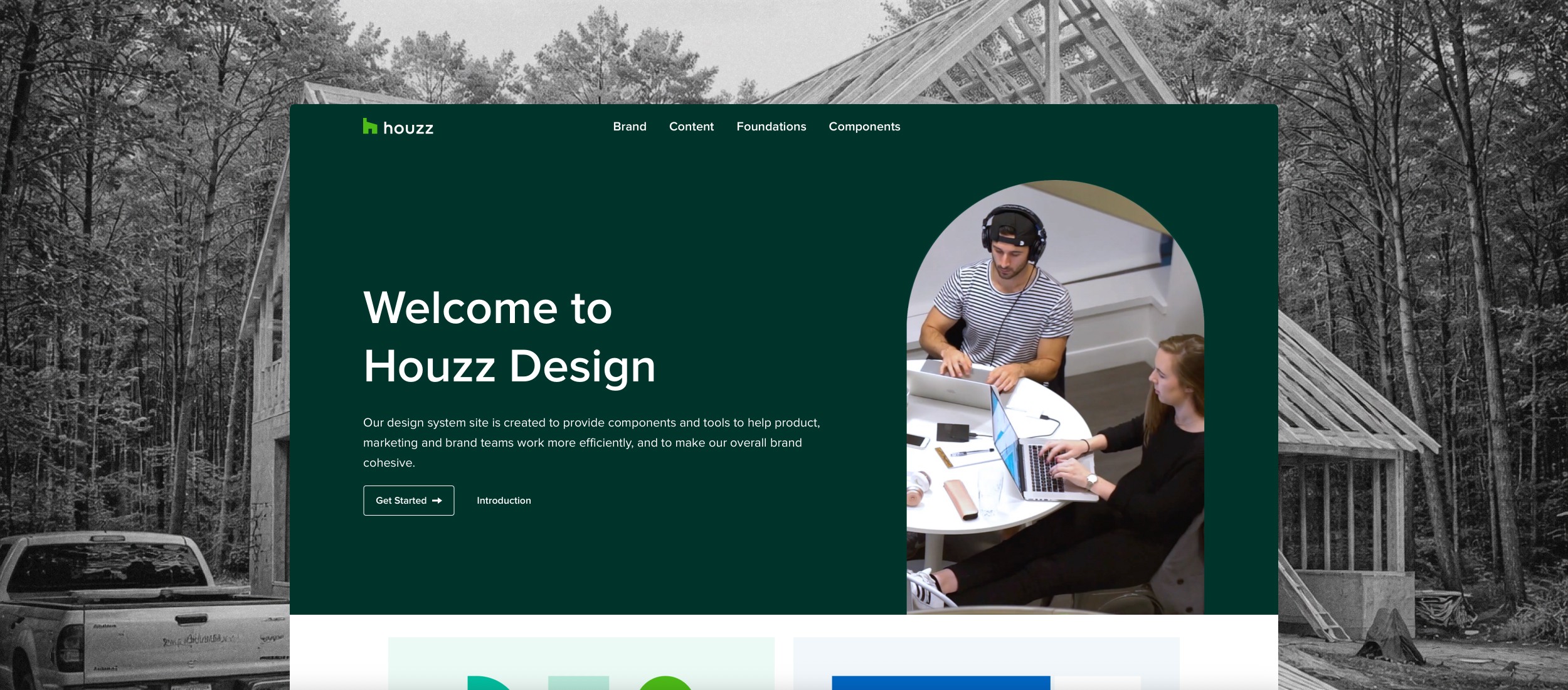
View the Houzz UI documentation website here.


Reflection

This project transformed how Houzz builds software. It moved the organization from fragmented experimentation to scalable, system-driven product development, while preserving flexibility for innovation.

The system remains foundational to both Houzz Pro (SaaS) and Houzz (consumer) today.